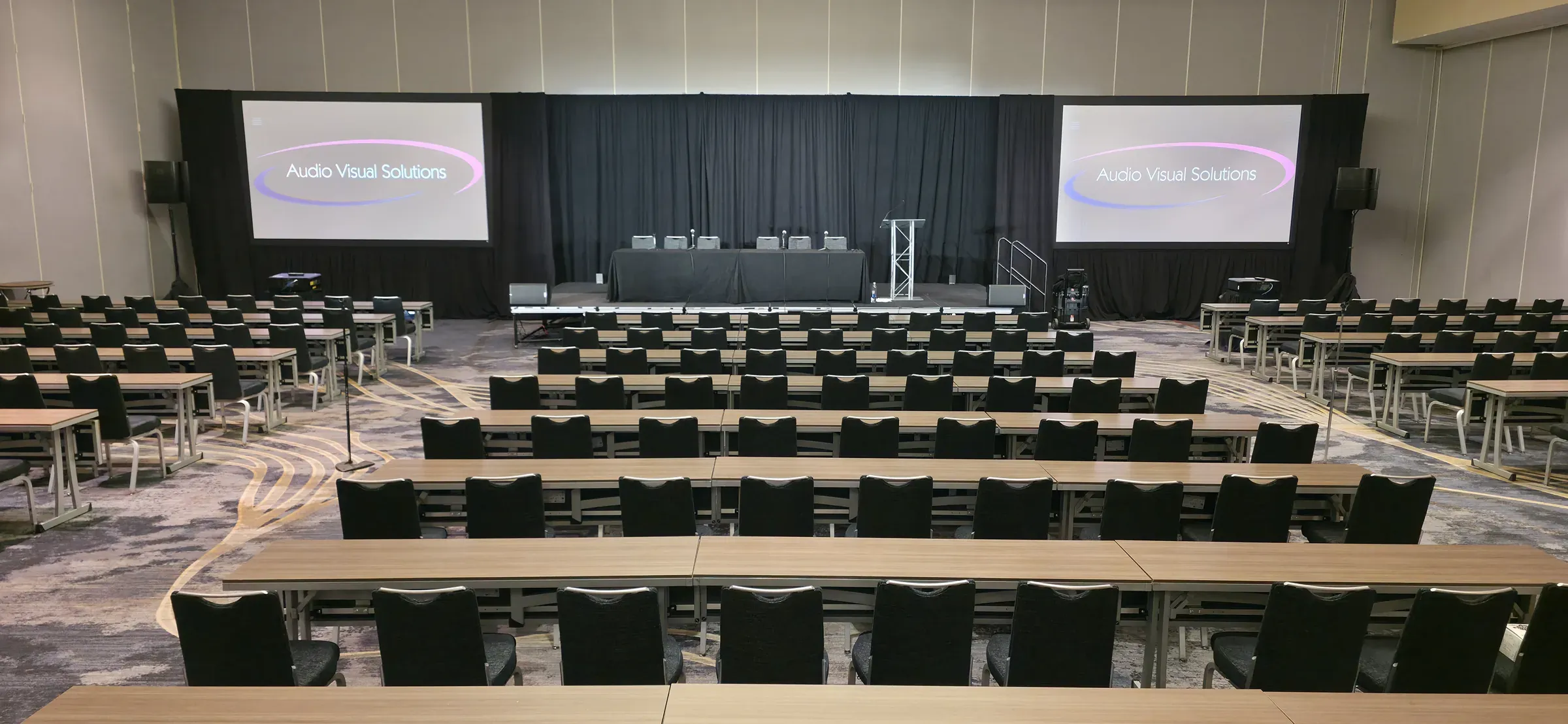
Abramson Cancer Center: 100+ Shows, Behind the Scenes
- 100+
- shows produced for Abramson
- ~20
- years as their AV partner
- 4–5
- shows a year
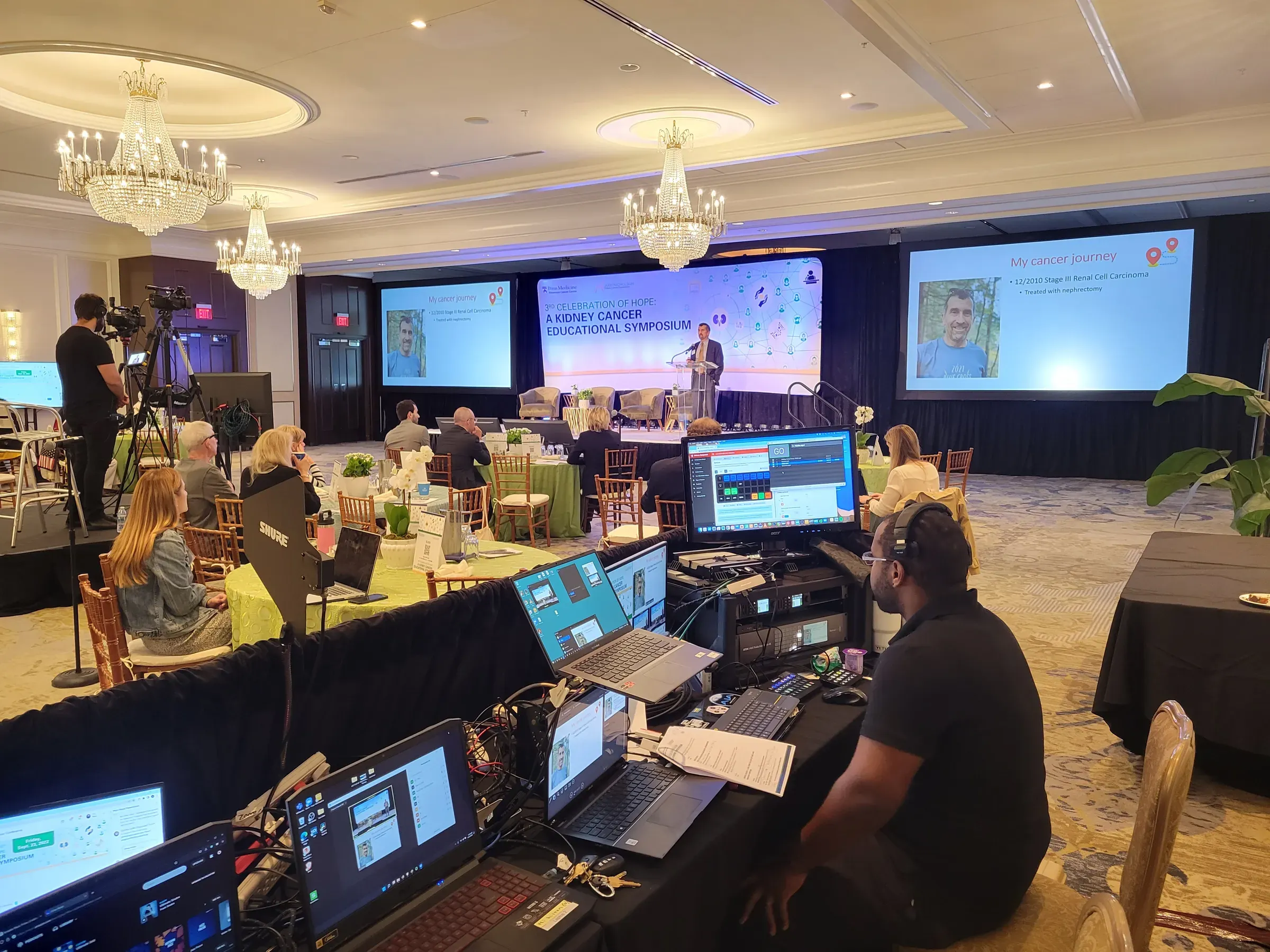
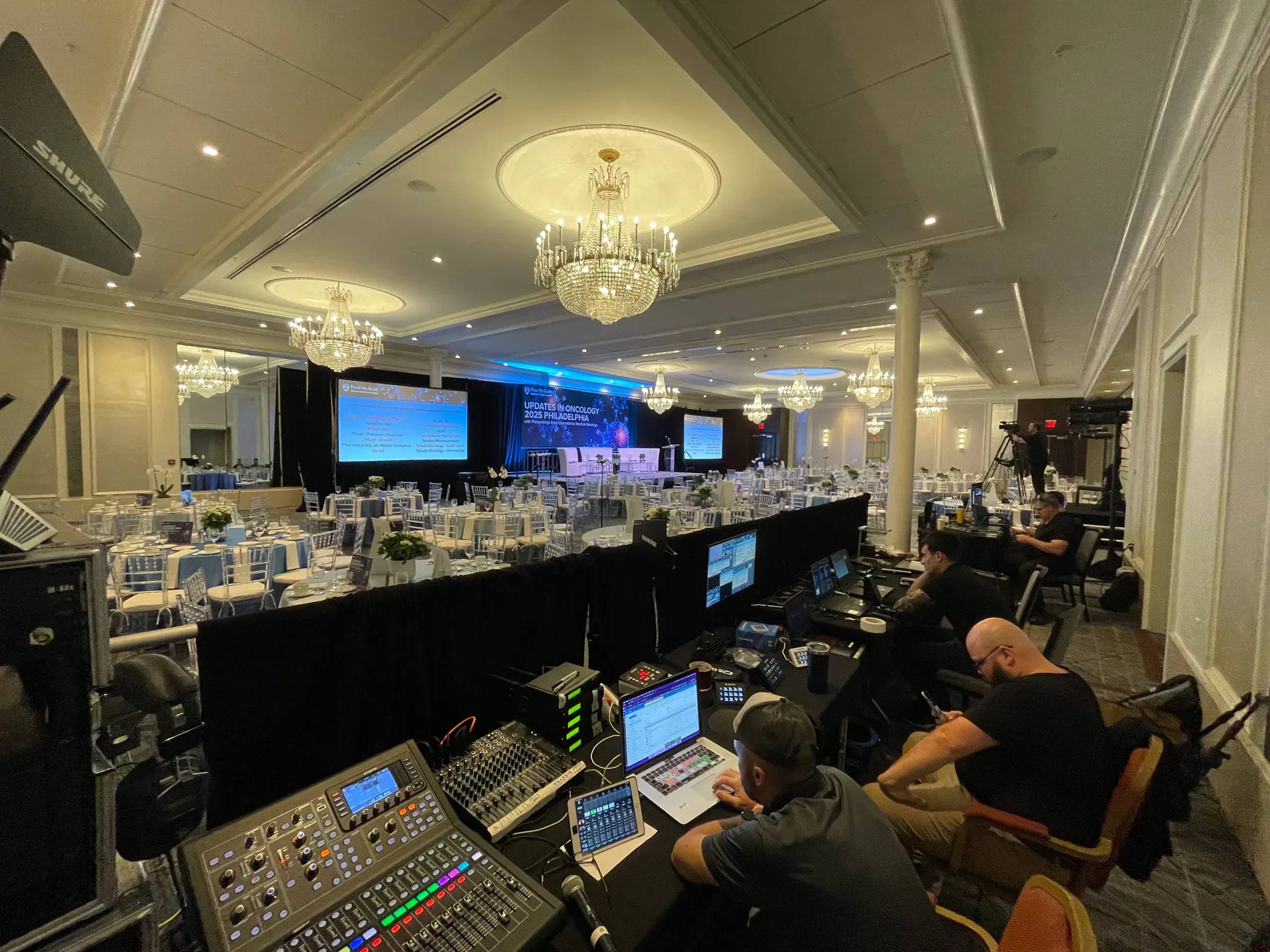
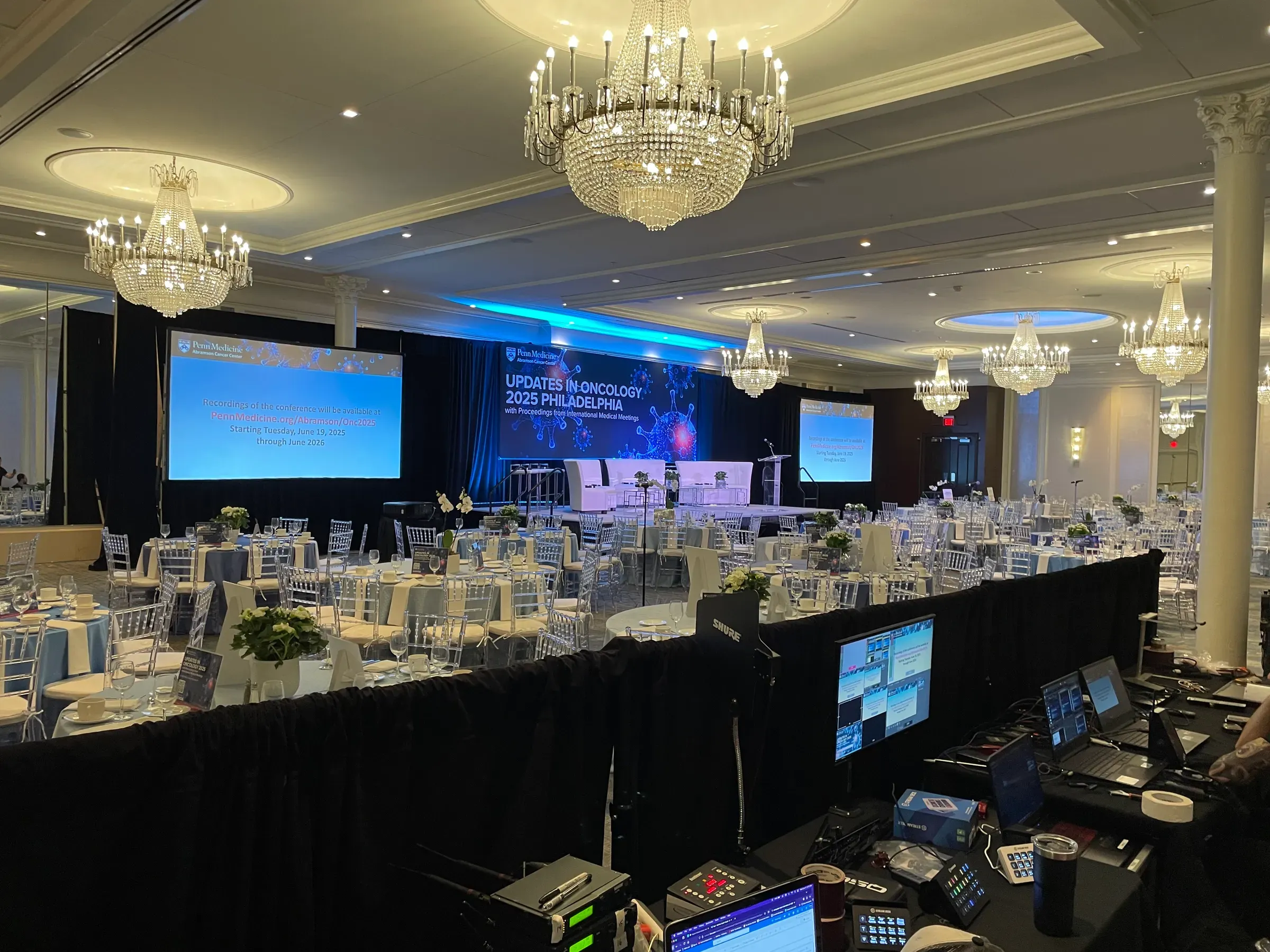
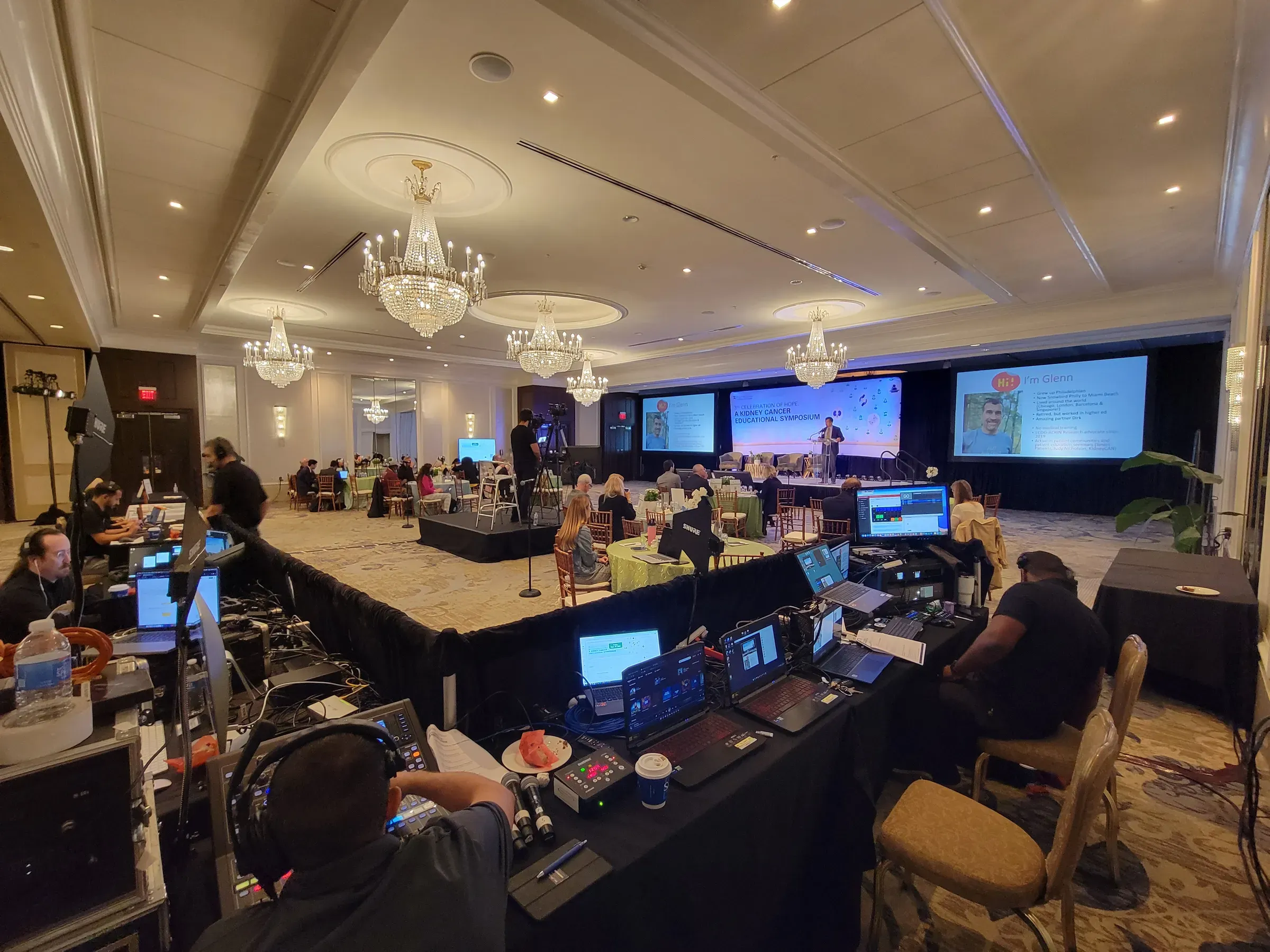
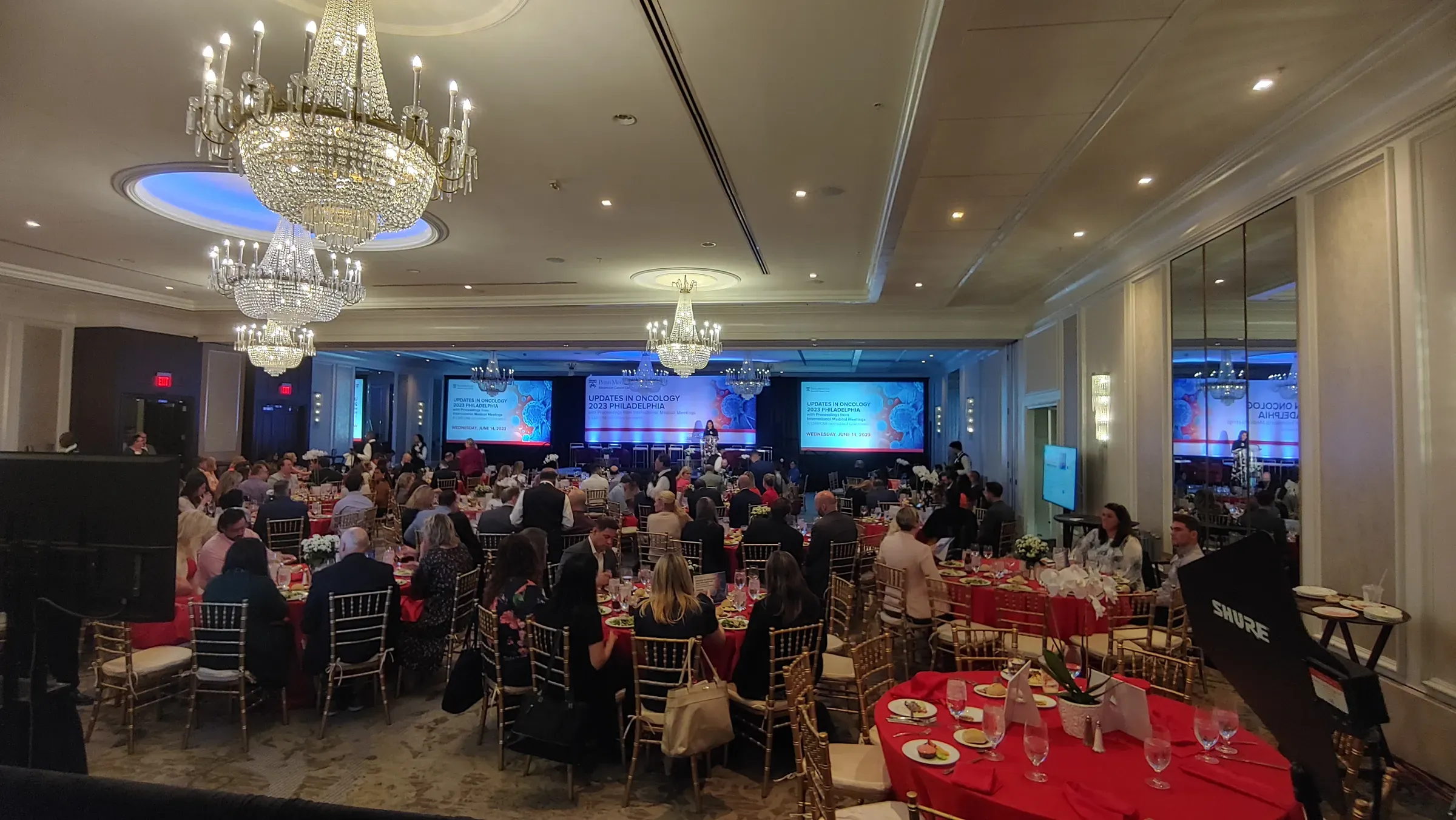
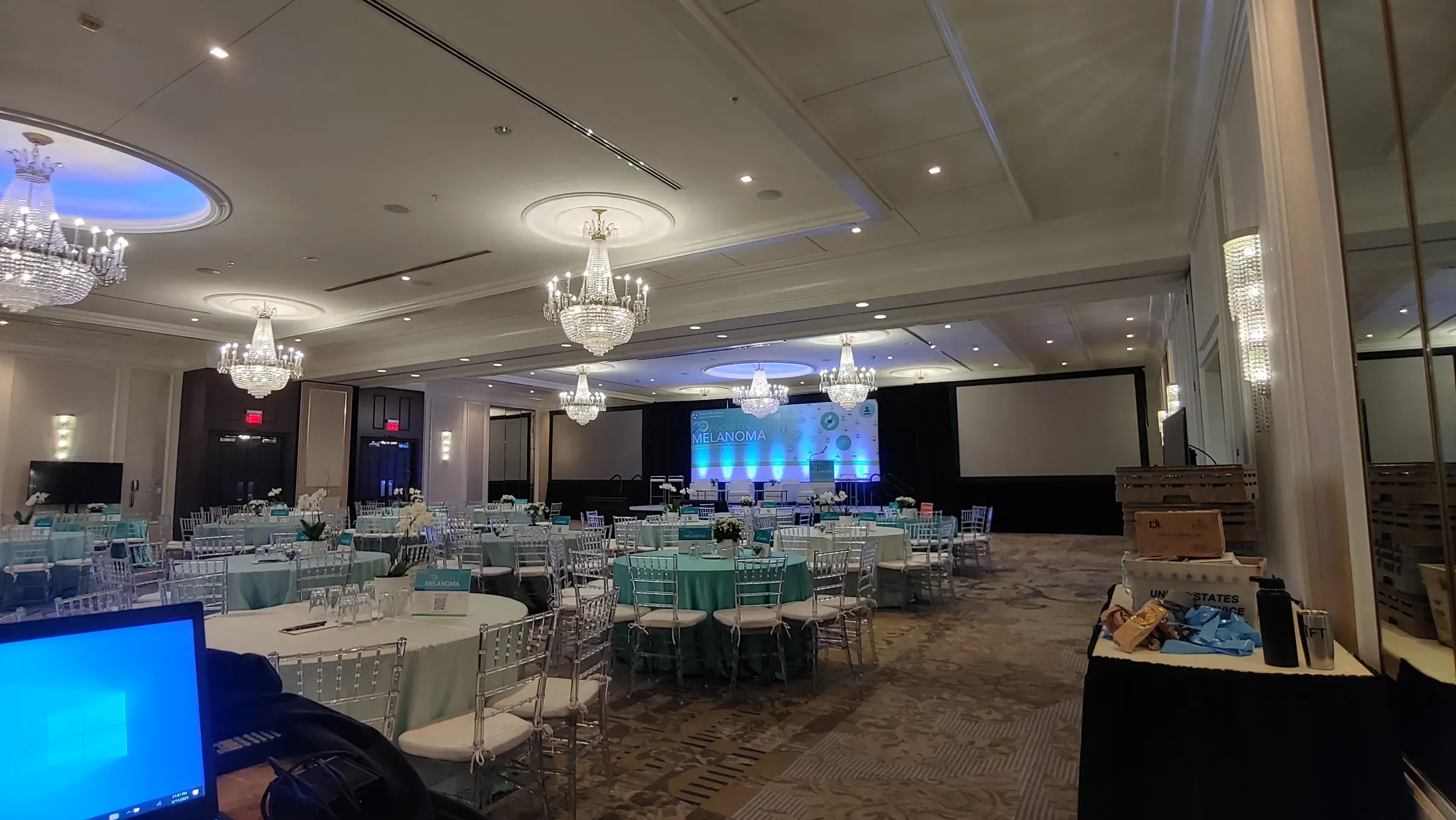
Penn Medicine’s Abramson Cancer Center has trusted us with its events for about 20 years: four to five shows a year, more than 100 in all. Recent shows include a kidney cancer educational symposium and Updates in Oncology 2025 Philadelphia.
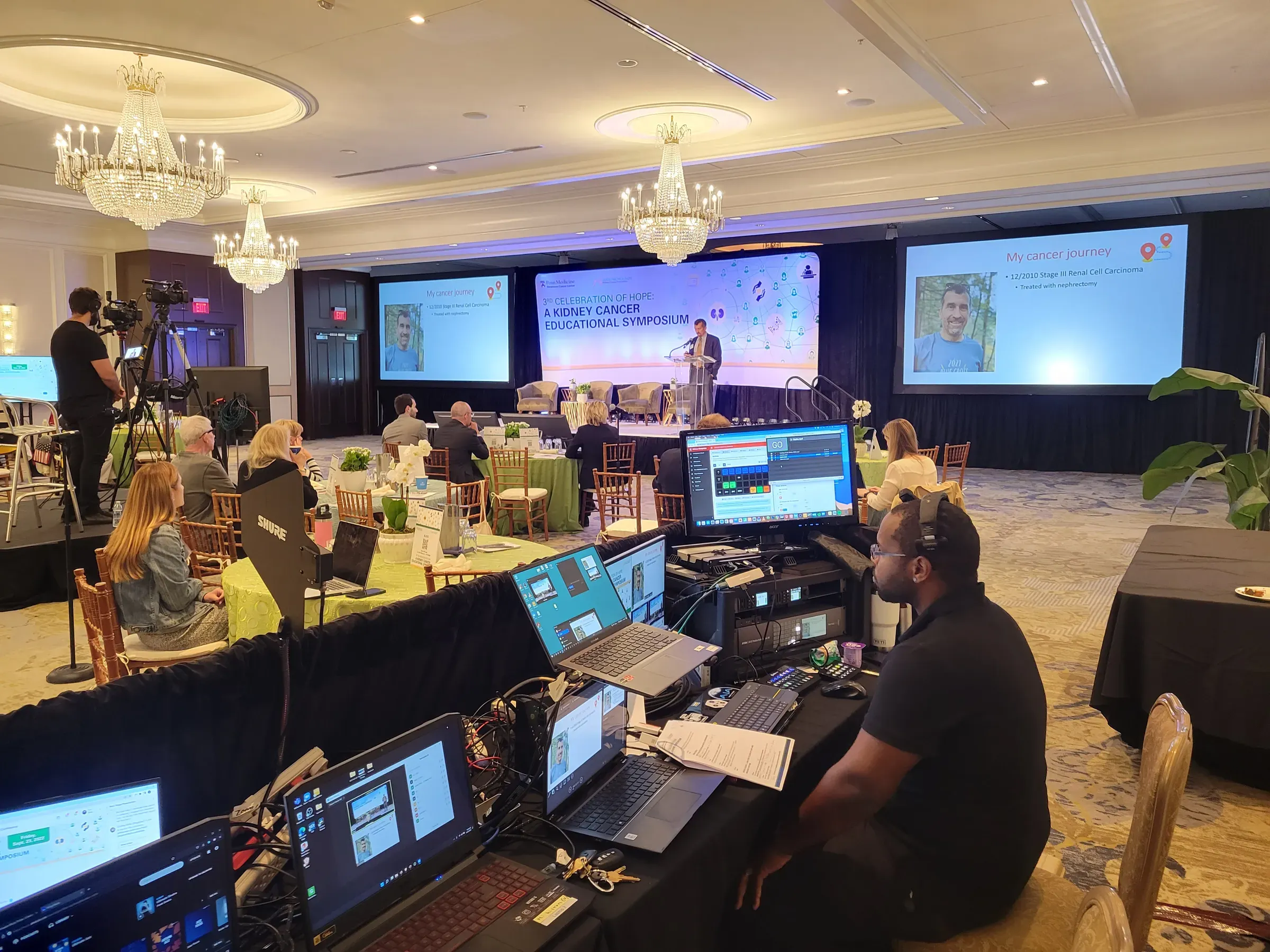
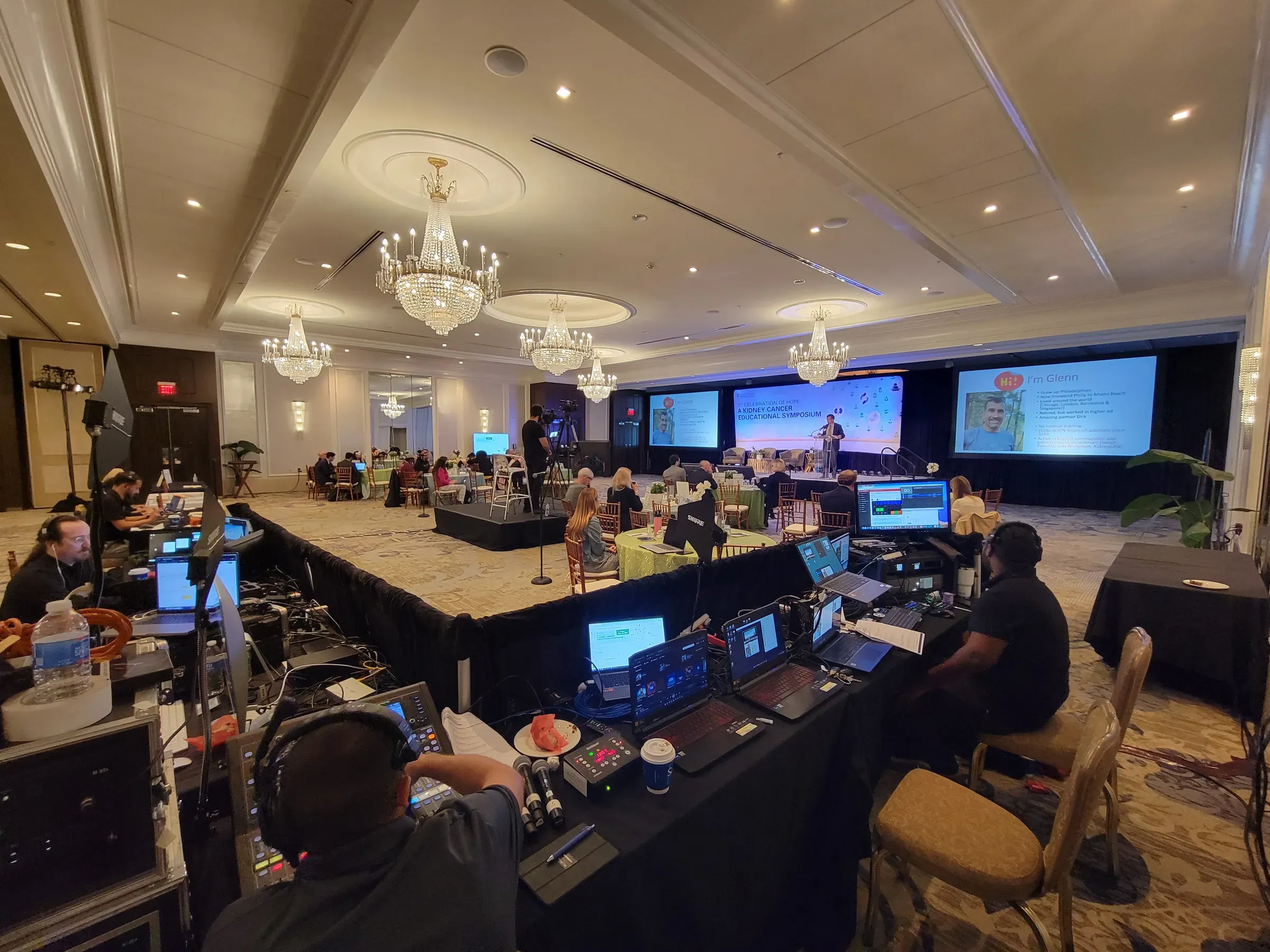
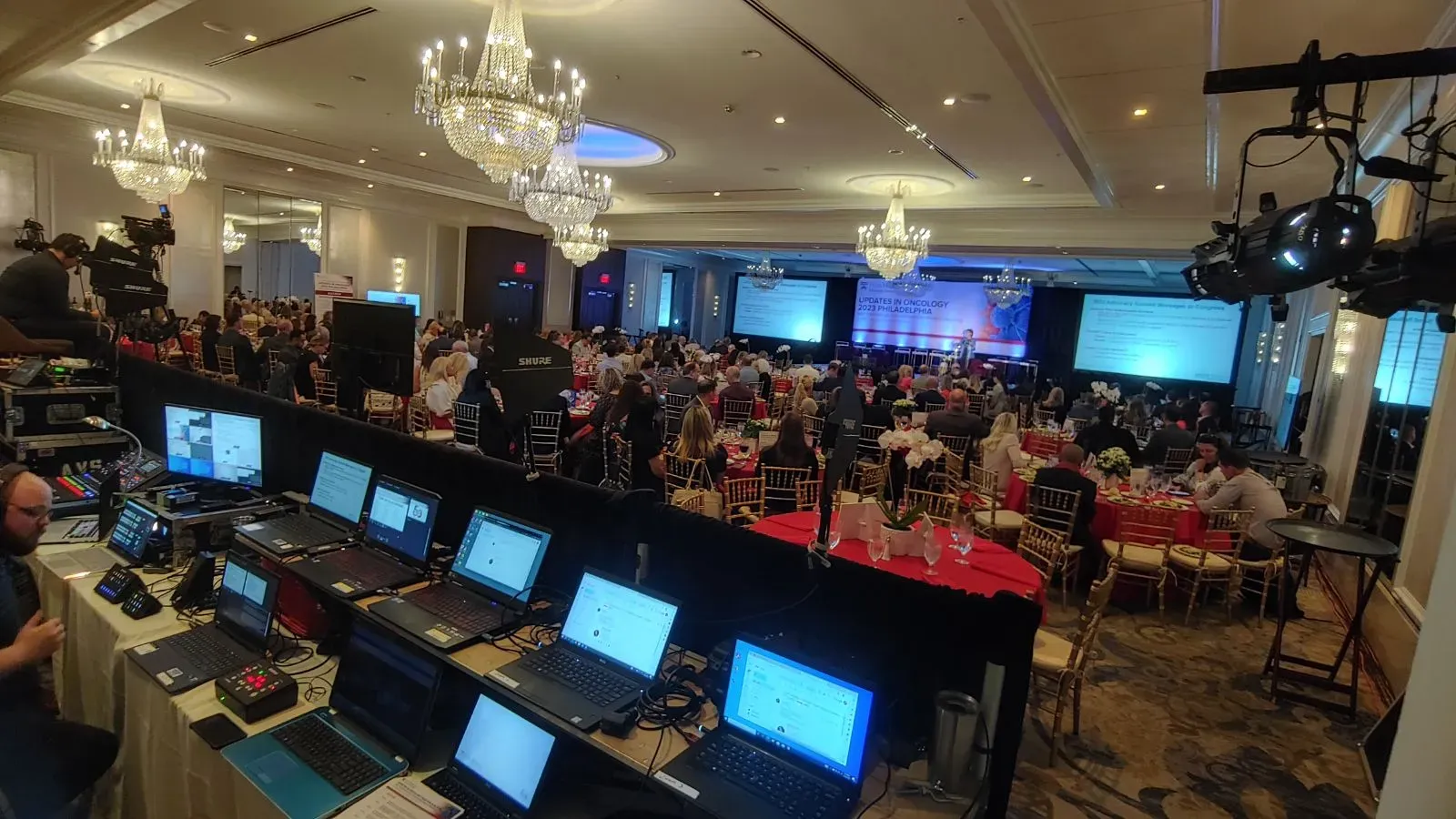
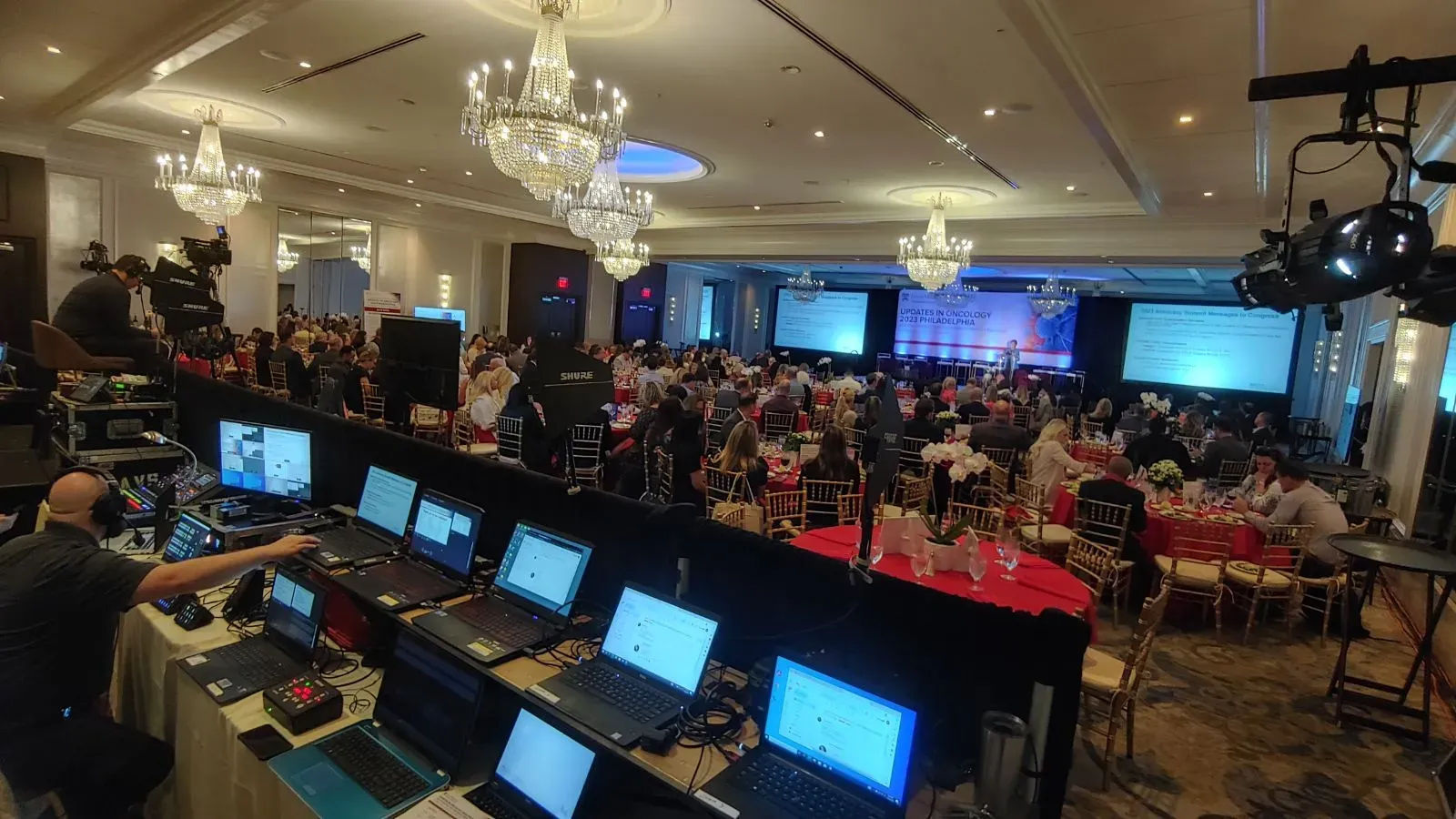
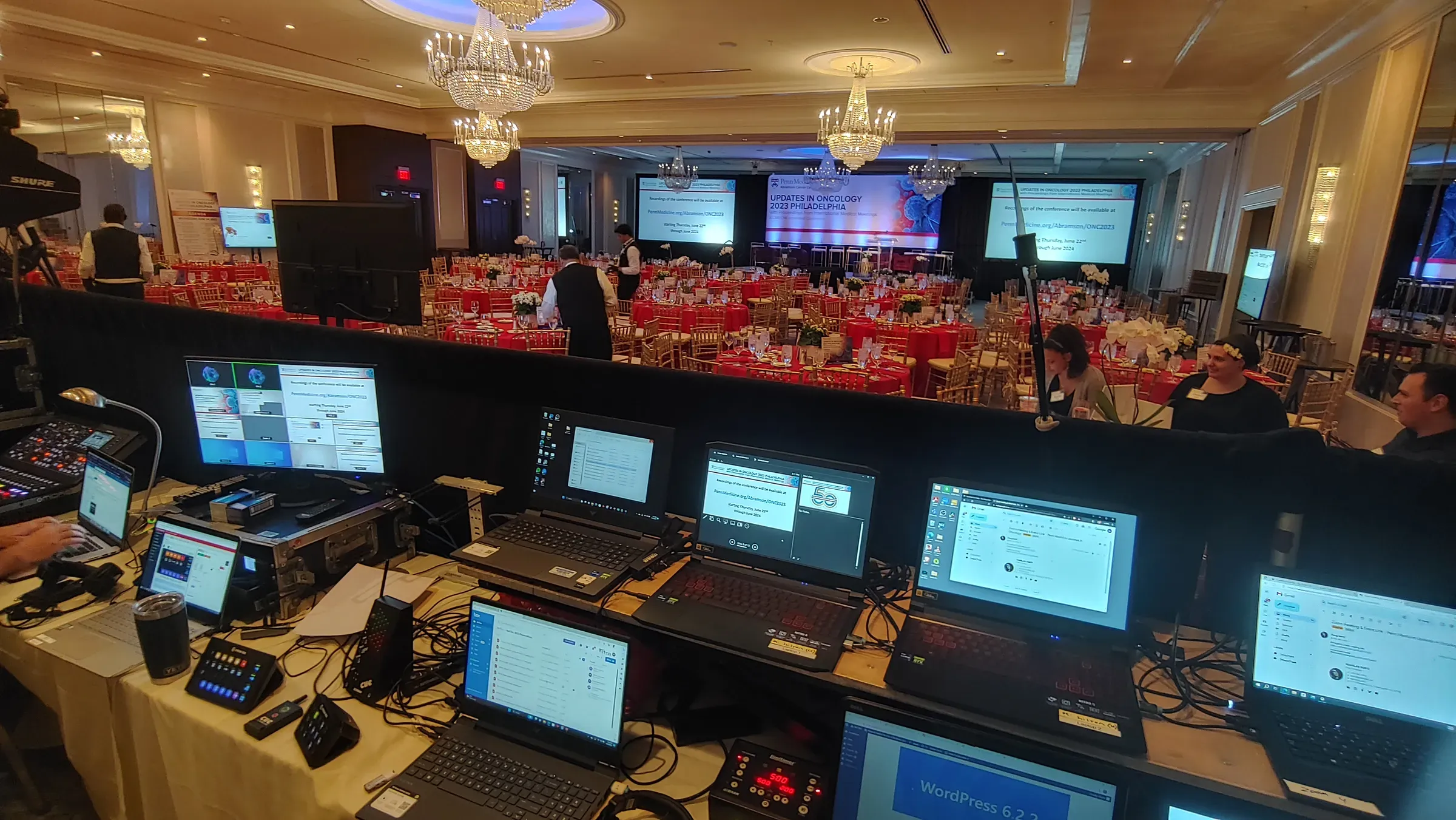
The audience sees the stage. Everything that makes it work happens at the tech table: the row of laptops, monitors and mixers set at the back or side of the room, where our crew runs the show. Here is what is going on back there while a symposium runs.
Audio: every microphone, live
The audio engineer mixes every microphone in the room in real time: the lectern, the presenters’ wireless mics, panel mics and audience question mics, plus the sound from any video that plays. Wireless receivers sit at the table with antennas in view of the stage, so microphones stay clear wherever presenters walk. For a medical program, the goal is simple: every word understood at every seat.
Video: what goes on the screens
The video operator decides what the audience sees. A switcher moves between presentation slides, camera shots of the speaker and video playback, and sends the right picture to each screen: the main program in the center, supporting content and IMAG (the speaker shown live) on the side screens, plus the feed for any recording.
Presentations, lined up in advance
A symposium can mean a long list of speakers, each with their own slides. Presentations run from playback laptops at the tech table rather than from each presenter’s computer, so every deck is loaded and lined up before the session starts, and the change from one speaker to the next takes seconds.
Cameras
Camera operators in the room capture the speakers for the screens and for any recording. The camera shots feed straight into the video switcher, so the operator can cut to them the moment they are needed.
Everyone on one headset channel
The crew stays connected on headsets the whole show. Walk-in music, each speaker’s microphone, the slide change, the camera cut: each cue is called and confirmed over the headset channel, so transitions look smooth from the audience.
The same crew, year after year
After 100-plus shows, our crew knows how Abramson runs a program, and the planning starts from there. We coordinate with each venue and handle union labor where a venue requires it, so the Abramson team can focus on its speakers and attendees.